Ajackus audited, denormalised, and secured Deposit Book’s wholesale deposit marketplace platform, cutting REST API endpoints by 26% and resolving critical security vulnerabilities in 12 weeks — work that directly supported the company’s FCA approval.

Engagement Model
Team Augmentation
Your team, supercharged — every Ajackus engineer comes AI-native, shipping 40–60% faster from day one
Managed Delivery
Tell us the problem. We handle everything — discovery, architecture, build, testing, deployment — at AI speed
BOT Model
We build your offshore engineering center with AI-trained teams, operate it to maturity, then transfer ownership to you
Expertise
AI Development
Custom AI agents, LLM integrations, RAG pipelines, and AI enablement — from strategy to production
Web Development
Enterprise web applications built with AI-augmented engineering for 40-60% faster delivery
Mobile Development
Native and cross-platform mobile apps built at AI pace with rigorous automated quality
DevOps
Infrastructure that scales automatically, deploys safely, and costs less
Low-Code/No-Code
Airtable, Glide, Shopify, and WordPress solutions with AI automation layers — built in days
Data Analytics
Turn raw data into decisions that drive revenue — 80% faster with AI-assisted analytics
UI/UX Design
User-centered interfaces designed with AI-powered speed — 3x faster iteration, sharper insights


How Deposit Book Cut Its API Footprint by 26% and Won FCA Approval with a Security-First Platform Overhaul
Services
Managed Delivery
Platform Engineering
Security Audit and Remediation
Technologies

26%
Reduction in API Endpoints
12 Weeks
Audit-to-Delivery Timeline
4
Critical Security Vulnerabilities Resolved
Overview
Executive Summary
Client
Challenge
Goals
Journey
Results
Technology
Takeaways
FAQ
Executive Summary
The Problem
Deposit Book’s wholesale deposit marketplace was held back by a slow, over-engineered backend and multiple unresolved security gaps that put user trust and platform efficiency at risk.
The Solution
Ajackus conducted a full codebase audit, denormalised the database and refactored redundant backend logic, cutting the platform’s REST API surface from 210 to 155 endpoints while resolving four categories of security vulnerabilities.
The Result
The engagement reduced API endpoints by 26% in 12 weeks and directly supported Deposit Book’s successful FCA approval in the UK, along with a new institutional partnership with Fintuitive.
Client
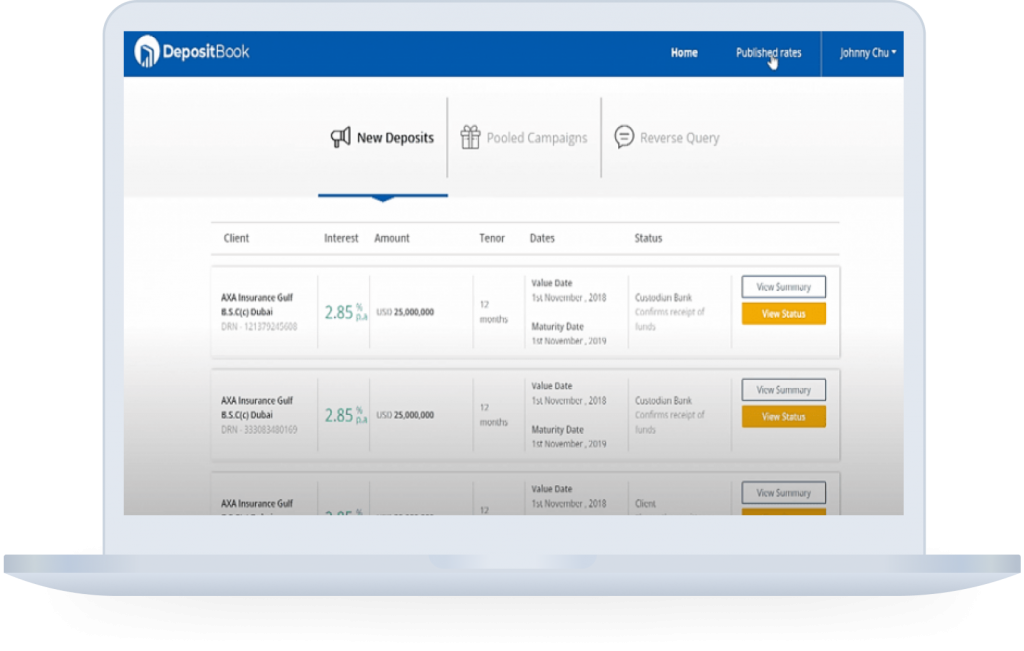
Deposit Book operates a global wholesale deposit marketplace, connecting Partner Banks, Depositors, Client Banks, and Custodian Banks to facilitate cross-border cash deposits. As the platform scaled, its backend architecture had accumulated technical debt that threatened both performance and regulatory credibility — a critical risk for a company operating in a heavily regulated fintech niche. Ajackus was engaged to resolve these issues ahead of a key regulatory milestone.
| Company | Deposit Book |
| Industry | FinTech — Wholesale Deposit Marketplace |
| Platform Scale | Connects Partner Banks, Depositors, Client Banks, and Custodian Banks globally |
| Engagement Type | Codebase audit, performance optimisation, and security remediation |
Challenge
The Bottom Line
Deposit Book needed to eliminate performance bottlenecks and close critical security gaps in its core platform without disrupting an active marketplace connecting banks worldwide.
As Deposit Book’s marketplace grew, the underlying platform had not kept pace. Years of incremental feature development had left the backend over-normalised and bloated with redundant logic, while unresolved security issues put both user data and platform trust at risk — a serious liability for a company pursuing regulatory approval in the UK.
Sluggish Platform Performance
Response times across the platform had become prolonged, degrading the experience for depositors and partner banks transacting in real time.
Unwieldy API Surface
Over-normalised database tables and redundant backend code had inflated the platform to 210 REST API endpoints, making the system harder to maintain and slower to extend.
Unresolved Security Vulnerabilities
The platform carried multiple security gaps, including sensitive information disclosure and insecure transport layer protection, that posed direct compliance and reputational risk.
Regulatory Exposure
With FCA approval on the horizon, unresolved security issues represented a business-critical blocker, not just a technical one.
Goals
The engagement needed to simplify the platform’s backend, resolve critical security vulnerabilities, and position Deposit Book for a successful FCA regulatory review — all without disrupting a live marketplace connecting banks worldwide.
| Goal | Success Criterion |
|---|---|
| Reduce backend complexity and redundant API surface | Meaningful reduction in total REST API endpoint count |
| Improve platform performance | Faster response times across core user flows |
| Close critical security gaps | Zero unresolved instances of the identified vulnerability classes |
| Support Deposit Book’s regulatory approval process | Platform security posture ready for FCA review |
| Preserve system stability during refactor | No disruption to live marketplace operations during the engagement |
Journey
The Ajackus team ran the engagement as a focused, two-track audit-and-remediation programme, embedding directly with Deposit Book’s platform to diagnose and fix issues at the source rather than patching symptoms.
Codebase Audit and Performance Enhancement
The Ajackus team began with a thorough codebase audit to identify the root causes of the platform’s performance issues. The audit traced the bottlenecks to an over-normalised database schema and redundant backend code paths that had accumulated across successive feature releases. Rather than optimising individual queries in isolation, the Ajackus team deliberately chose to denormalise key tables and refactor the underlying logic — a more invasive but longer-lasting fix than incremental tuning. This work reduced the platform’s REST API footprint from 210 to 155 endpoints, a 26% cut that simplified the system while improving response times.
Security Issue Resolution
In parallel, the Ajackus team addressed four categories of security vulnerabilities identified during the audit: sensitive information disclosure, insecure transport layer protection, insecure file upload handling, and sensitive information exposed in GET requests. Each fix was scoped and remediated with Deposit Book’s upcoming regulatory review in mind, ensuring the platform’s security posture would hold up under FCA scrutiny — a constraint that shaped prioritisation throughout the 12-week engagement.
Results
The engagement cut Deposit Book’s API footprint by 26%, resolved four categories of critical security vulnerabilities, and was delivered in 12 weeks — directly supporting the company’s FCA approval and a new Fintuitive partnership.
26%
Reduction in API Endpoints
155
Endpoints Remaining (Down from 210)
12 Weeks
Total Engagement Timeline
What went well:
Technical Achievements
- Reduced REST API endpoints from 210 to 155, a 26% cut achieved through database denormalisation and code refactoring
- Resolved four distinct categories of security vulnerabilities, including sensitive information disclosure and insecure transport layer protection
- Delivered the full audit-to-remediation programme in 12 weeks without disrupting live marketplace operations
Business Impact
- Directly supported Deposit Book’s successful FCA approval in the UK, clearing a critical regulatory milestone
- Enabled a new partnership with Fintuitive, a UK-based fintech, giving Fintuitive’s institutional clients access to worldwide cash deposits through Deposit Book’s marketplace
- Strengthened platform trust and reliability for banks and depositors transacting on the marketplace
Why It Worked
Audit Before Action
The Ajackus team started with a full codebase audit rather than assuming where the problems were. This surfaced the true source of the platform’s performance issues — an over-normalised schema and redundant logic — rather than treating individual slow endpoints in isolation.
Fix Root Causes, Not Symptoms
Denormalising the database and refactoring backend code was a more significant undertaking than surface-level query tuning, but it addressed the structural cause of the endpoint sprawl, cutting the API surface by 26% instead of masking the symptom.
Security Aligned to Regulatory Stakes
The Ajackus team treated security remediation as a regulatory-readiness exercise, not a generic checklist. Each vulnerability was fixed with Deposit Book’s FCA review in mind, directly contributing to a successful approval outcome.
Frequently Asked Questions
What caused Deposit Book's platform performance issues before the Ajackus engagement?
An over-normalised database schema and redundant backend code had accumulated over time, inflating the platform to 210 REST API endpoints and slowing response times across core user flows.
What security vulnerabilities did Ajackus resolve for Deposit Book?
The Ajackus team remediated four categories of vulnerabilities: sensitive information disclosure, insecure transport layer protection, insecure file upload handling, and sensitive information exposed in GET requests.
How did the API endpoint reduction improve the platform?
By denormalising database tables and refactoring redundant code, the Ajackus team cut the endpoint count from 210 to 155 — a 26% reduction that simplified the codebase and improved maintainability alongside performance.
How quickly can Ajackus embed engineers to run an audit like this?
Ajackus typically scopes and begins audit-and-remediation engagements within days of alignment on priorities, embedding engineers directly with the client's existing platform team rather than working at arm's length.
How does Ajackus handle security remediation for regulated fintech platforms?
Ajackus prioritises fixes based on regulatory exposure and business risk, not just technical severity — as with Deposit Book, where remediation work was scoped specifically to support an upcoming FCA review.









Let’s Build your Project Together