Custom Web Application Development for the Medicines Patent Pool.
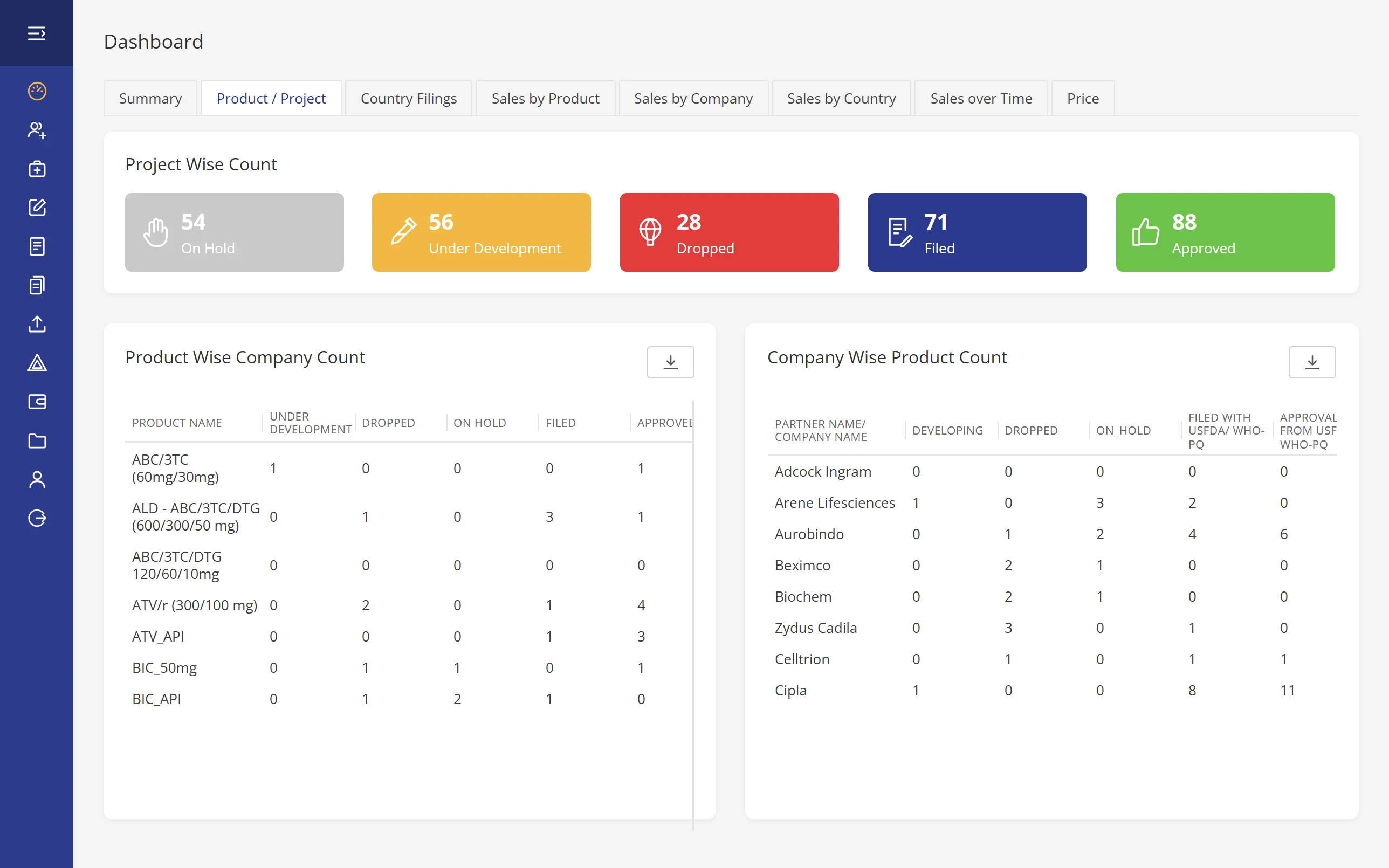
We built MPP a centralized data platform that brings partner and product data, meeting minutes, partner documents, compliance templates and reporting into one place, plus an interactive map on MPP's public website showing where its licensed medicines are available.


About this engagement
The Medicines Patent Pool is a United Nations-backed public health organization that works with civil society, governments, international organizations, industry and patient groups to license needed medicines and pool intellectual property, encouraging generic manufacture for low- and middle-income countries. Much of its day-to-day work ran offline. Partner and product details were entered by hand, meeting minutes were kept offline, and partner invoices and tax documents were stored in disconnected places, which made records hard to track and documents hard to find.
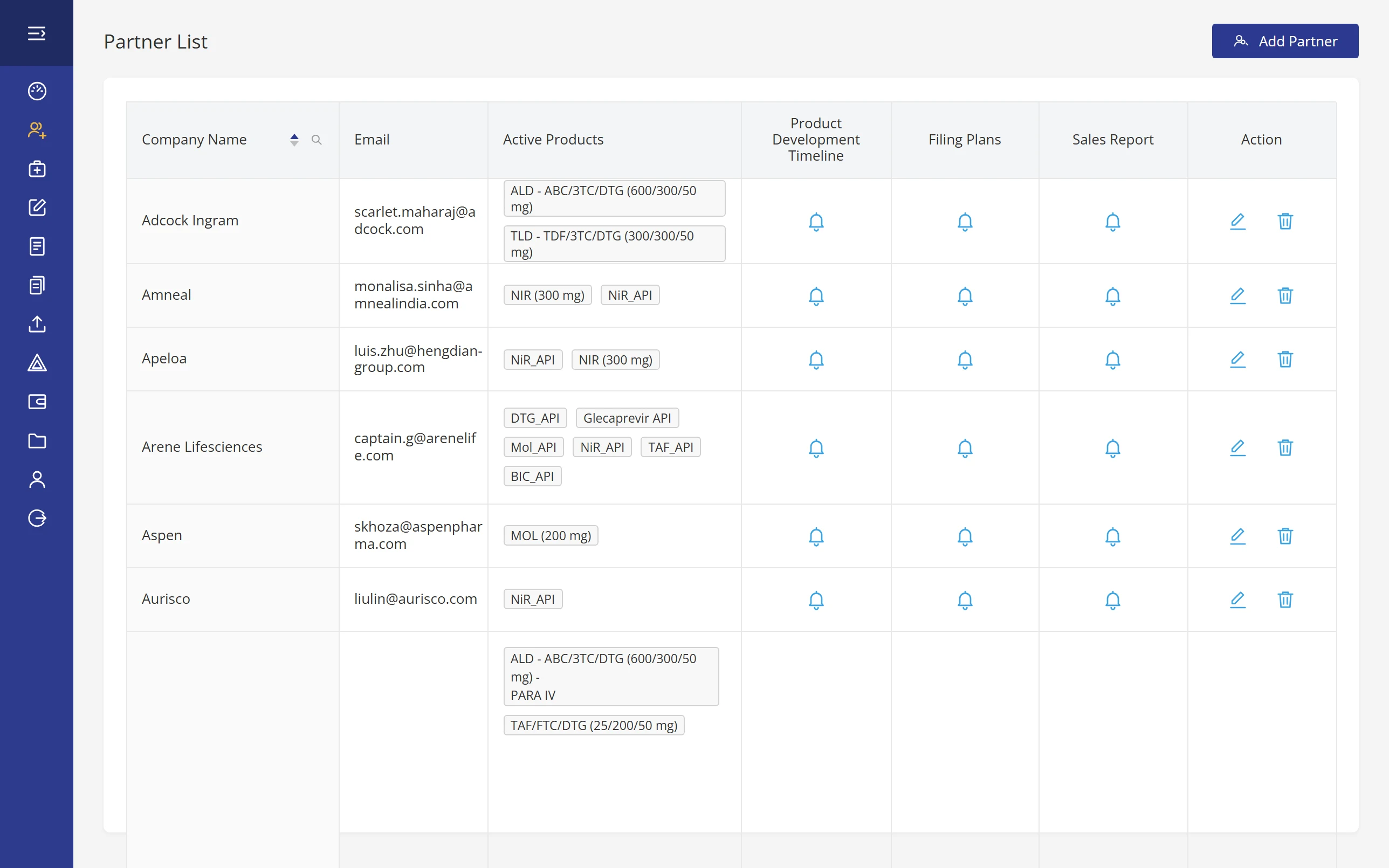
Through custom web application development, we built a data portal that replaces those offline workflows with one platform. It manages partner and product lists, stores quarterly meeting minutes, holds partner invoices and tax documents with admin access controls, lets users create compliance templates, and includes PDT, filing and sales reports. We also built an interactive map for MPP's public website that shows the countries where its licensed medicines are available.
Challenges in running a global health organization on offline records
MPP's work spans many partners, products and countries. Like many organizations dealing with data silos in healthcare, its records were spread across manual entries, offline files and separate storage, which slowed the team down every time they needed information. When records live in different offline places, finding one document can take longer than the work it supports.
The four challenges
Four problems made it hard for MPP to track, find and manage its information.
Manual data entry
Details about partners and active products were entered by hand, which was slow and open to errors.
Edge cases we had to solve
Moving MPP's workflows online created three problems we had to handle in the build.
- 01Sensitive documents with controlled access
Invoices and tax documents needed to be easy to retrieve, so we had to add admin access controls to keep them protected.
- 02Templates that change over time
Compliance needs change, so we had to let users create new templates themselves instead of hardcoding a fixed set.
- 03Data for staff and for the public
Some data serves MPP's internal teams, and some serves the public, so we had to build both the internal portal and a public map.
Solution: web portal development for MPP's partner, product and reporting data
We replaced MPP's offline workflows as a whole, not one spreadsheet at a time, so every team works from a single source of truth.
What MPP's data portal needed
Moving files into a shared folder wouldn't have fixed the problem. The portal needed three things, and each one shaped what we built.
One place for every record
Information was spread across offline sources. So we built centralized data management for data, minutes, documents and reports.
Control over sensitive documents
Invoices and tax documents needed protection. So we built document management with admin access controls.
Visibility beyond MPP's team
MPP's global coverage mattered to the public too. So we built an interactive map for MPP's public website.
The six parts of the portal
Each module replaces one offline workflow.
Partner and product lists
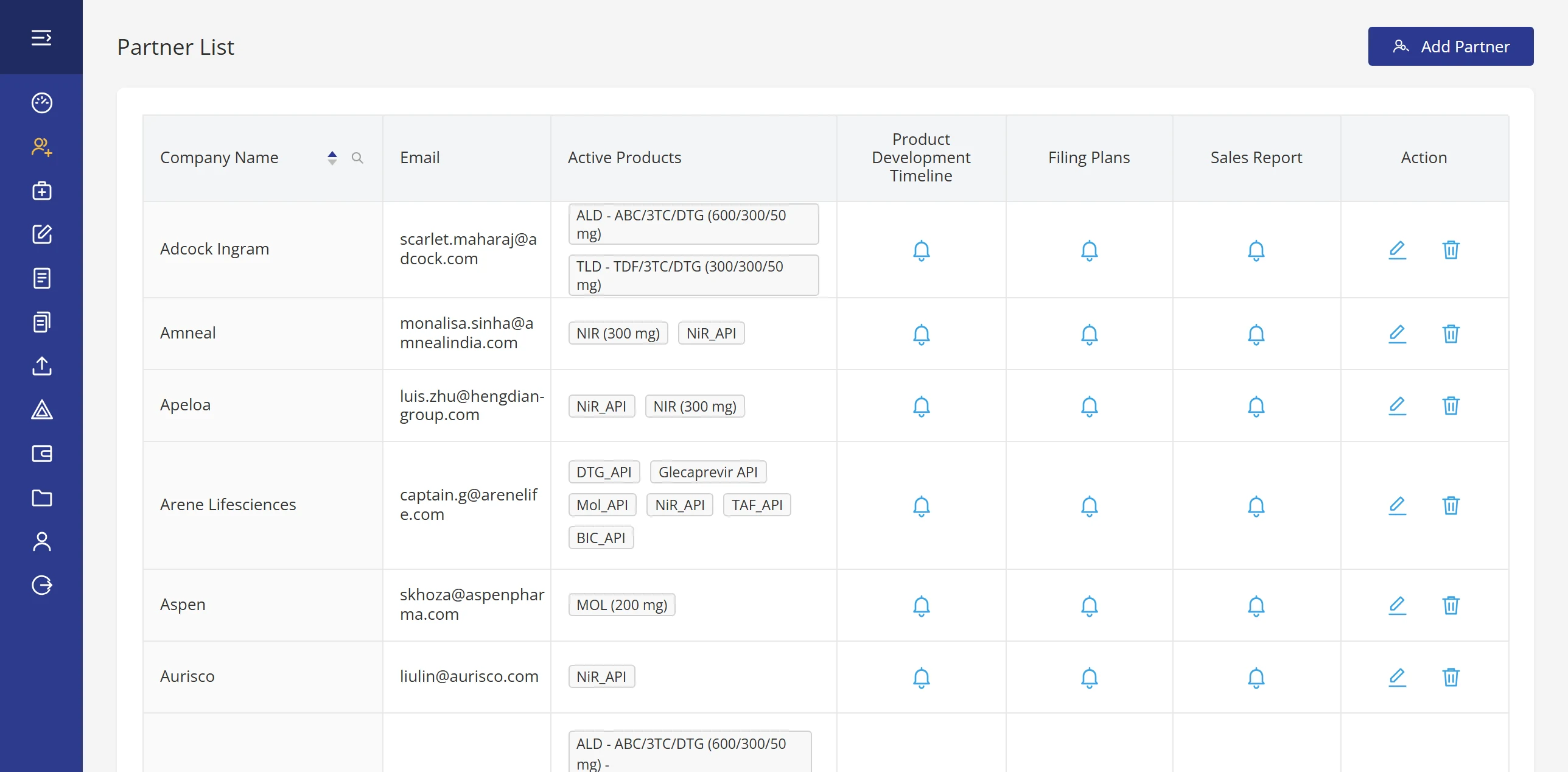
Partner data management for names, categories and product classifications, kept up to date in one place.
Meeting minutes
Meeting minutes management, with quarterly minutes uploaded and stored in one searchable location.
Partner documents
A document management system for partner invoices and tax documents, uploaded and managed by MPP with admin access controls.
Compliance templates
Users create and manage compliance templates as needed, keeping processes consistent across the organization.
Reports
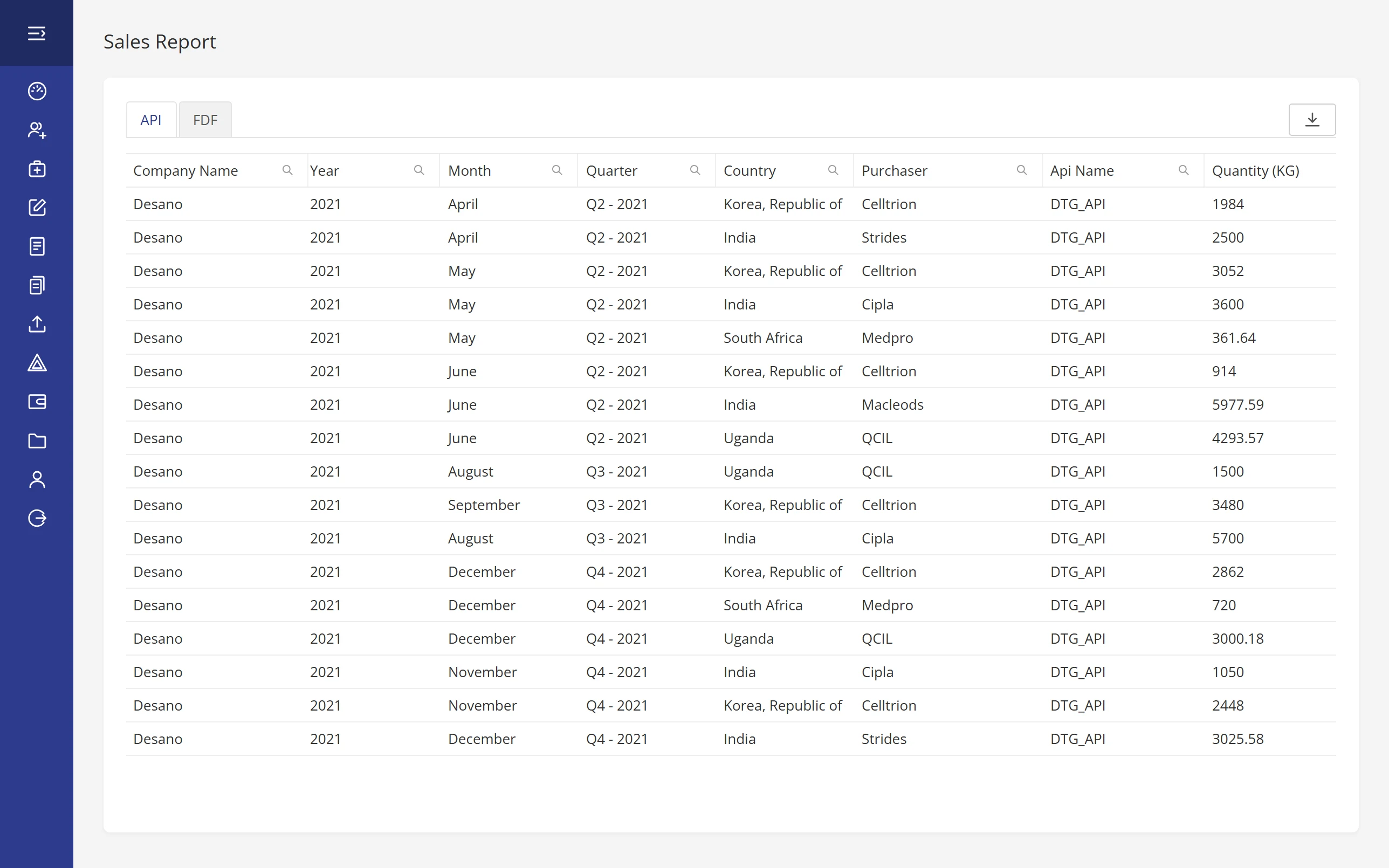
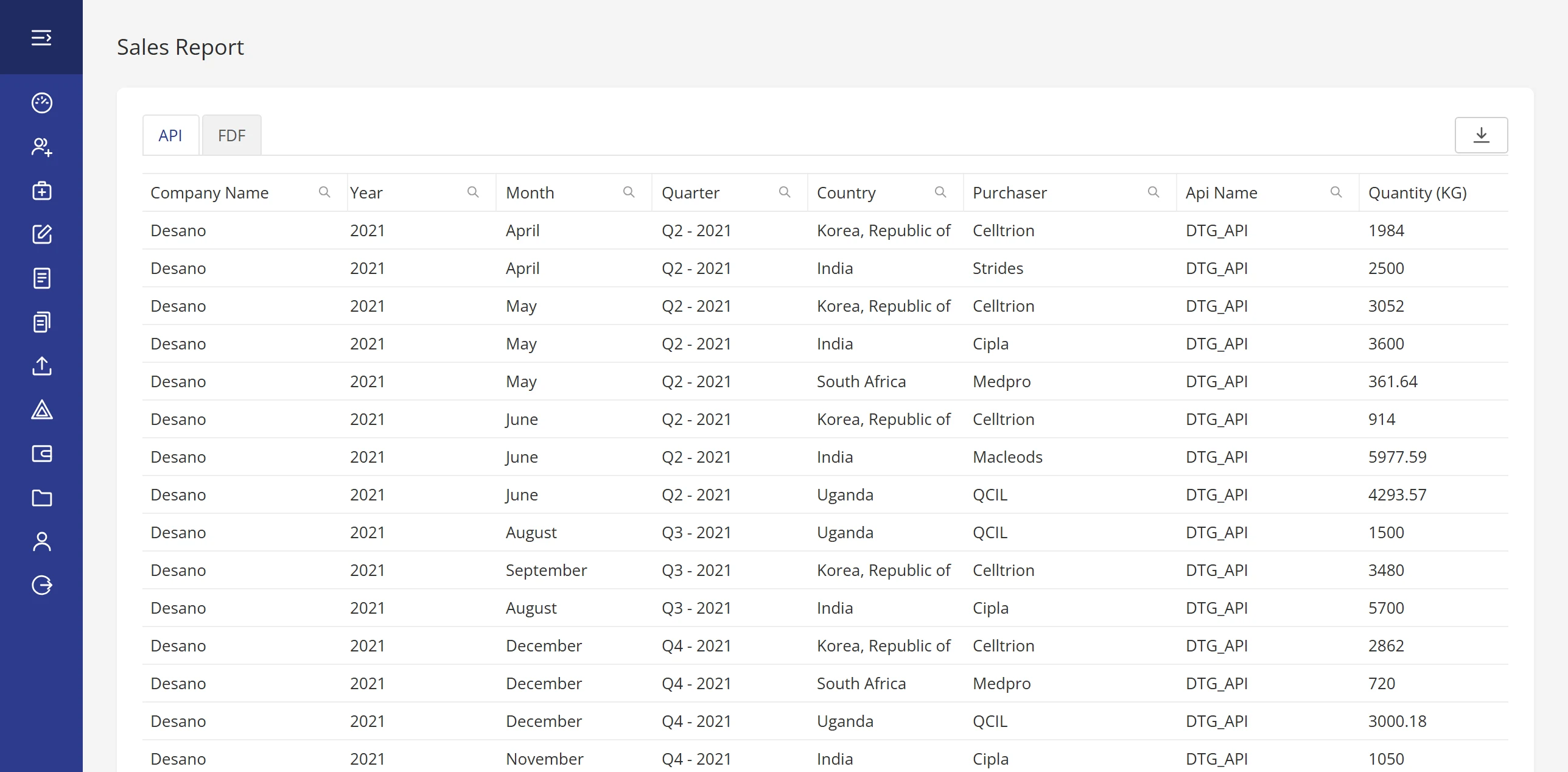
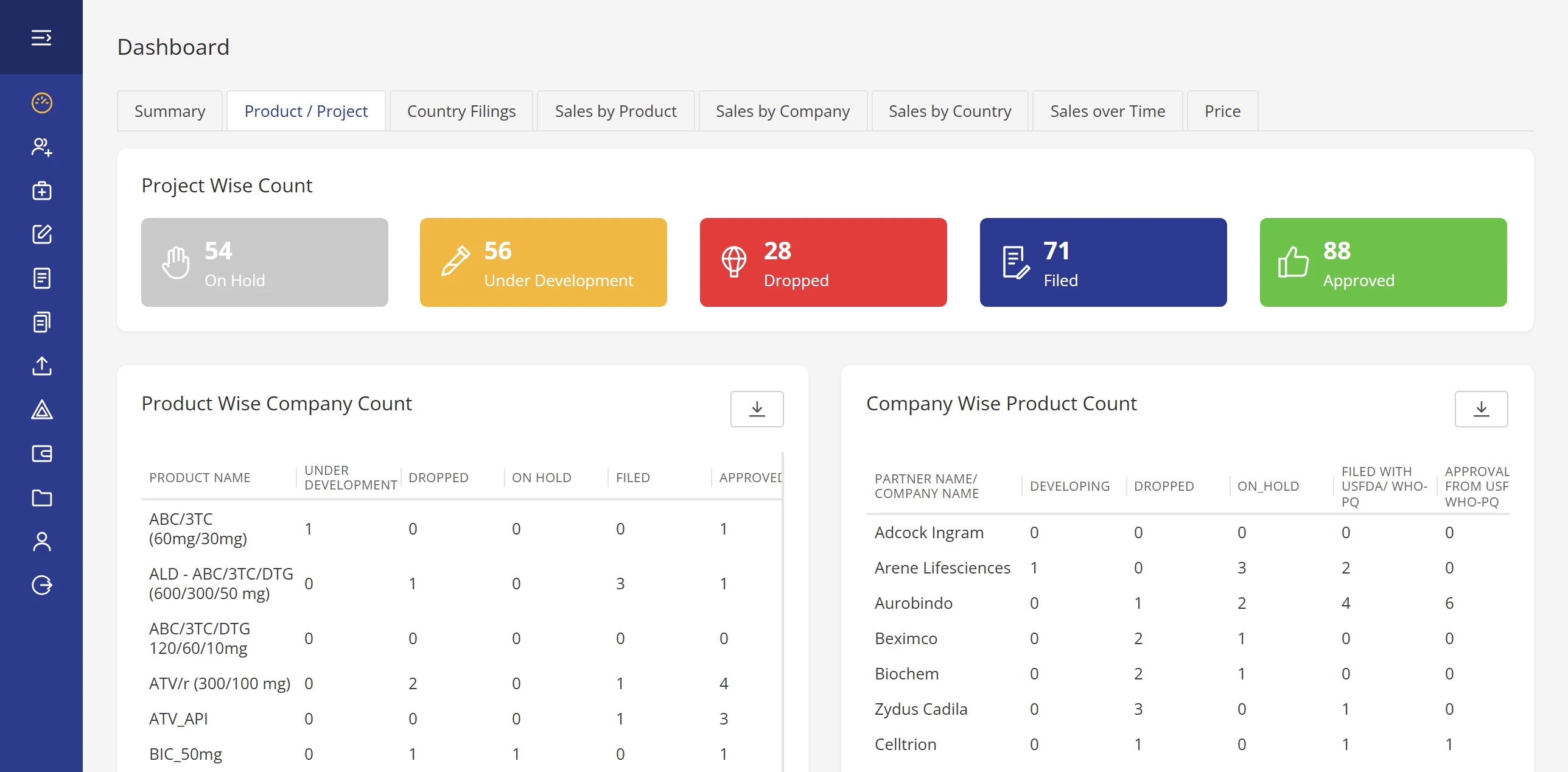
PDT, filing and sales reports with product details, country, quarter, medicine sales and purchaser data.
Public coverage map
An interactive map on the website showing product details and the countries where MPP's licensed medicines are available.
How we built it
We built the portal in three parts, from internal records to public-facing data.
Centralizing records
We built a records management system for partner and product lists, quarterly meeting minutes and partner documents, all in one searchable portal.
Why we chose this technology
The stack was chosen to manage structured data reliably and keep the portal easy to extend.

Outcomes: How each of MPP's workflows changed
Moving to digital records management changed every workflow the portal touches. Here's where each type of information lived before, and where it lives now.
Partner and product data
Meeting minutes
Invoices and tax documents
Compliance templates
Reporting
Public view of coverage
One internal portal for every team
MPP's staff now find partner data, past meeting minutes, documents and reports in one place, instead of searching across offline sources.
A public window into MPP's reach
The interactive map gives visitors to MPP's website a direct view of where its licensed medicines are available, turning internal data into public information.
The foundation for automated reporting
The portal also became the data source for MPP's Power BI reporting, which we connected directly to it. Read the Power BI case study.
FAQs
A data portal is a web platform that brings an organization's data, documents and reports into one place, with controlled access for the people who need them. MPP's portal replaced offline files and manual entry with six connected modules.
Six modules: partner and product lists, quarterly meeting minutes, partner invoice and tax document storage with admin access, compliance templates, PDT, filing and sales reports, and an interactive coverage map on MPP's public website.
By moving every offline workflow into one platform. Partner data, minutes, documents, templates and reports now live in the same portal, so teams stop searching across separate sources and work from the same information.
Django runs the backend and PostgreSQL stores the data, so the portal stays structured and easy to extend. Our Django development services and PostgreSQL development services teams built the modules on this stack, with Airtable supporting flexible data management.
Partner invoices and tax documents are stored in the portal with admin access controls, so only authorized users can retrieve and manage them.
Facing similar challenges? See how we can help.
If your organization still runs key workflows on offline records, tell us about them. Our custom web application development team will show you how we'd bring them into one platform.
Talk to our team →
Let’s Build your Project Together